
'As our per capita income increases and various demographic segments emerge, the need for various kinds of protection and risk covers will become even more explicit.'

What will it take for Tesla to plug and play in India? Sector pundits say it's a mix of strategy, getting the price right, timing, the right talent, and above all, patience.

Amazon's pantry division across 29 cities in India helps sellers sell FMCG products on its platform.

A rebound in oil prices, FII outflows and concerns over current account deficit weighed on the domestic currency, pushing it to fresh life-time lows.

Amid slowing growth and low interest rates, investors will need to focus on stock-picking, suggests John Remmert.

'Aquaponics can effectively cushion the impact of a calamity like COVID.'

With its new line-up, the firm has managed to touch the right chords, but to regain market share from the established players, Micromax will have to fight a protracted battle.

2019 appears a story of two halves for Indian equities - a more difficult first half might precede a stronger second half, said Abhiram Eleswarapu, bottom, left, Head of India Equity Research, BNP Paribas in an interview with Ashley Coutinho.

Ahead of its maiden public offer to hit the market early in June, car major Maruti has warned that company sales and profits could come under pressure due to increasing competition.

Price is no longer king. Maruti now has a new strategy to score over rivals.

Religion matters. Aspirational India is still poor. India admires strong leaders. India values decency. Shreekant Sambrani highlights the reasons why the BJP pulled off improbable victories in the Hindi heartland.

The RBI refuses to classify a cryptocurrency as an asset since it doesn't have future cash flow and its value is always fluctuating because of speculation. There is also no consumer protection, observes Tamal Bandyopadhyay, and hence the e-rupee trial run.

Over the past two decades, India has evolved economically as well as from the market's perspective.

The report, however, said a sustained weakness in USD against the emerging market forex remains a key risk to this view.

Mercedes-Benz India, BMW India and Audi India have lined up over 50 new model launches as they seek to recoup previous year's loss in volumes, reports Shally Seth Mohile.

Investment in market leaders with a safety-first approach could yield reasonable returns across sectors.

The steep depreciation of rupee will not give an immediate advantage to the country's exporters.

These refineries, commissioned mostly in the 1950s and 1960s during India's early industrialisation push, are inefficient and costly to maintain compared to their modern counterparts on the coast mainly operated by private companies.

'We plan to touch Rs 1 trillion of Amul brand's turnover in the next five years.'

Axis Bank's acquisition of Citibank's consumer finance business for Rs 12,325 crore - the second biggest deal in the Indian banking sector - is seen as a good deal at a good price. The acquisition enables Axis Bank to close the gap with competition in some key segments such as credit cards. At the same time, there are some key issues that are crucial for the deal's success, apart from the fact that it will take some time for Axis to reap the full harvest of its investment.

Keep exit plans handy, D-day could be the second week of August, writes Sonali Ranade in Market Notes.

The two battle it out in the controversial but lucrative fairness cream market, spark a fresh bout of aggression in the war between the brands

Like last year, this year too smartphones dominated the most successful launches taking the top three slots, with two auto brands completing the top 5 line-up.

A financial turnaround with the Etihad partnership and debt restructuring has not fully materialised.

'A well made masala film will never go out of fashion. Pushpa proved it yet again.'

It has invested $2 billion and spent $200 million on its R&D centre in Bengaluru, the largest such centre outside China where some core technologies are under development.

A combination of externalities such as global trade wars and slowing growth, continuing glitches in accessing offsets under the GST regime, which has created a liquidity crunch for smaller exporters, and the growing competitiveness of smaller countries are causing the slowdown.

After being cornered by Patanjali and macro-headwinds, ayurveda major Dabur is pulling up its socks. With better sales and improved margins, the firm is now looking to leverage the renewed popularity of ayurveda, mostly ignited by rival Patanjali. Sunil Duggal, bottom, left, chief executive officer, Dabur India, shares his plans and insights with Arnab Dutta.

The diesel car becomes too expensive with BS-VI and market assessment says the customer will not buy it at that price, says R C Bhargava, chairman, MSIL. He expects buyer preference to change swiftly in favour of petrol, CNG, and other alternative technologies.

Are we creeping back to controls on corporate decision making? Three moves over the past eight months reinforce this notion, says Kanika Datta.

My sense is that we are in a situation similar to 2011-13, notes Debashis Basu.

By splitting its business into separate verticals with dedicated portfolio heads, CavinKare looks to improve distribution and facilitate more launches in the future
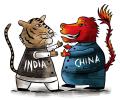
Indian auto and pharma industries import several critical components and raw materials from China.

Can we find fault with RBI for not intervening enough in the market? Actually no, say some experts. A correction in rupee was long overdue.

Designers Shraddha Nigam and Mayank Anand tell us why they're committed to the cause of empowering Indian weavers through their label.

The Union Budget announcement of a minimum support price (MSP) that will be 50 per cent more than the cost of production has started a debate on the calculation of cost. Ramesh Chand, member, NITI Aayog, speaks to Sanjeeb Mukherjee on this and related issues.

India's economy could also suffer some ill-effects without necessarily triggering retaliation via higher tariff barriers against Indian goods, says Devangshu Datta.

Such allegations are unjustified, given that the CCI's remedies do not promote a free-for-all scheme.

Employers are now looking to hire professionals who can demonstrate their skills rather than reel off a catalogue of undirected theoretical qualifications.
